
Last Updated: September 2026
Spring garden ideas can help you turn an overlooked outdoor space into somewhere more useful and enjoyable. At Midland Sheds and Summerhouses, we believe a good garden balances practical needs with the things you love, whether that means growing vegetables, watching wildlife or enjoying a quiet cup of tea.
Spring is a useful time to review your layout as plants begin growing again. Before buying anything, consider how you use the space, where the sunlight falls and what you can realistically maintain.
These eight spring garden ideas cover planting, storage, seating and wildlife, with options for small plots as well as larger gardens.
1. Add raised beds for flowers or vegetables
Raised beds can give a garden structure and make growing areas easier to organise. They also let you choose a soil mixture suited to your plants, which can be helpful where the existing ground is poor or prone to waterlogging.
Practical spring garden ideas start with positioning. Choose a location with suitable light for your crops, keep beds narrow enough to reach into comfortably and leave room between them for everyday access.
Budget for the soil and filling materials as well as the frame. A substantial bed can require more material than you expect.
Avoid working soil while it is very wet or frozen. The RHS raised-bed guide explains the main choices and construction considerations.
2. Make room for wildlife
Creating a more wildlife-friendly garden does not require abandoning the whole lawn. A small area of longer grass, suitable flowering plants and a quiet corner for natural shelter can all contribute.
Wildlife-focused spring garden ideas work best when you think beyond one season. Choose plants that offer flowers at different times, and consider shelter as well as food.
Leave some leaf litter or twiggy material in a suitable border corner, while keeping it away from timber walls and access routes. A shallow water dish is another manageable addition, provided it is kept clean and topped up.
The RHS wildlife gardening advice offers useful starting points. Aim for a space that supports wildlife while remaining practical for your household.
3. Give your shed a useful role in the layout
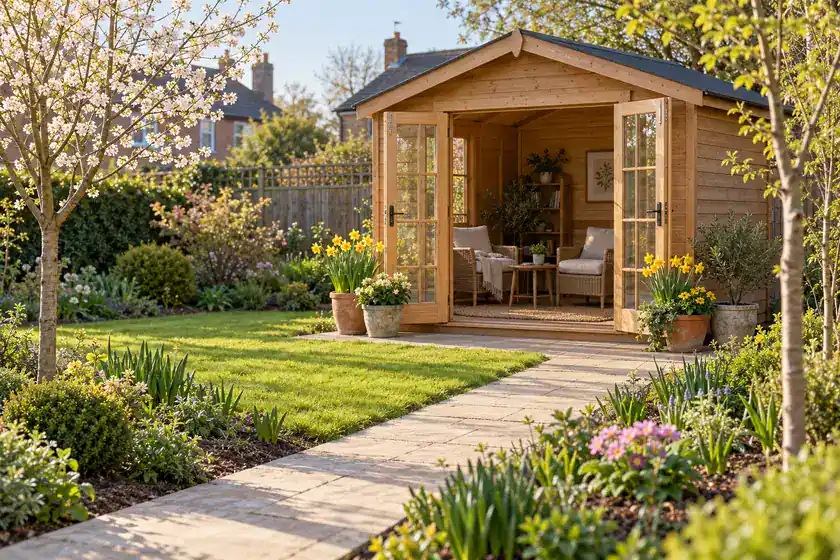
A shed is more than somewhere to put the lawnmower. It can provide a base for gardening, with tools, pots and supplies organised close to the areas where you use them.
When planning spring garden ideas, check how easily you can reach the shed with a wheelbarrow or bulky equipment. Leave space for the doors to open and avoid planting right across the route.
Inside, use shelves for smaller items and hooks for suitable hand tools. Keep heavy equipment low down and within the floor’s load capacity, with a clear walkway through the building.
For a new garden shed, measure both the available footprint and the door opening you need. Plan the base, delivery access and maintenance space before choosing a size.
4. Create a relaxing summerhouse retreat
A summerhouse gives you somewhere to sit, read or enjoy the garden when you want a little shelter. Its position can also influence the whole layout, creating a focal point for paths and planting.
Comfortable spring garden ideas begin with the view and the light. Consider what you will see from inside, how much direct sun reaches the windows and whether nearby planting will cast shade as it grows.
Keep the interior simple: a couple of chairs, a small table and storage for books or hobby materials may be enough. Measure the furniture first so you can preserve room to move.
Browse our summerhouses and consider the specification alongside the appearance. Regular use in colder weather may require insulation, heating and other improvements, depending on the building.
5. Use containers for flexible spring colour
Containers are useful when you want to brighten a patio, frame a doorway or try growing plants without creating a new border. They also make it easier to adjust the layout as your needs change.
Affordable spring garden ideas can start with just a few well-chosen pots. Select plants suited to the light and exposure, use appropriate compost and make sure containers have drainage holes.
Group pots where they can be enjoyed without blocking paths or doors. Leave room to open summerhouse doors fully, and avoid placing wet containers directly against timber walls.
Check watering regularly, especially during dry or windy spells. For immediate colour, choose plants already in season at a garden centre; follow their care instructions and plan ahead for future displays.
6. Build a small rockery or alpine display
A rockery can introduce a different texture and give small plants a setting where they are easier to appreciate. You do not need a large mound of stone: a compact raised area or planted trough can work in a smaller garden.
Rockery-based spring garden ideas depend on creating the right conditions. Many alpines need good drainage, so adding rocks to persistently wet ground will not solve the problem by itself.
Choose plants suited to the position and prepare a suitable growing mixture. Keep larger stones stable, and think about how the display connects to nearby paving or borders.
The RHS alpine-growing guide explains drainage and container options. A modest display beside a seating area can be easier to enjoy and maintain than an ambitious rock garden.
7. Introduce a wildlife pond
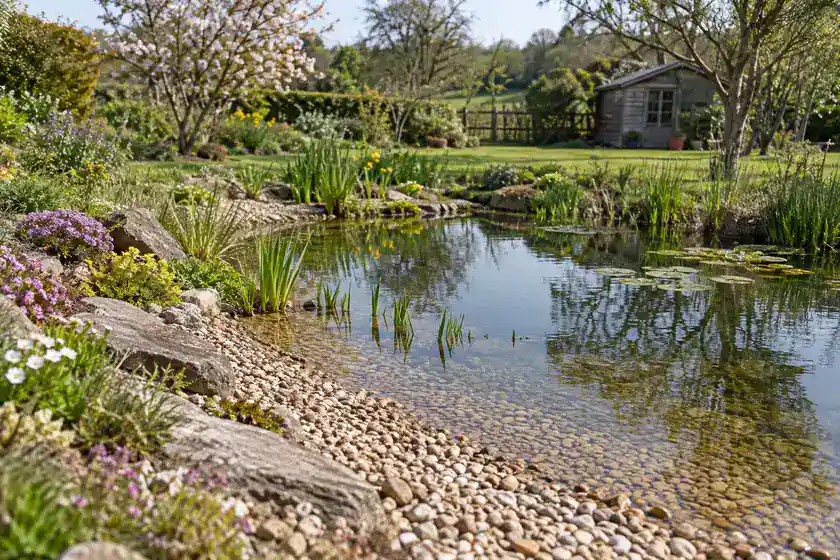
A pond can add another habitat to your garden and give you something interesting to watch from a bench or summerhouse. Even a small water feature can have wildlife value when it is planned carefully.
Pond-based spring garden ideas should prioritise access for animals. Include a long, shallow slope on at least one side, or suitable ramps for a container pond, so creatures can get in and out.
Choose appropriate pond plants and a location that leaves room for maintenance. An irregular shape can look natural, but the edge design and escape routes matter more than the outline alone.
Consider children’s safety before adding open water, including secure barriers where appropriate. Consult the RHS wildlife pond guide when planning the feature.
8. Improve paths and add somewhere to sit
Sometimes the best improvement is making the garden easier to use. A clear route between the house, shed and seating area can make everyday gardening less awkward and encourage you to spend more time outside.
Simple spring garden ideas include repairing uneven paving, clearing overgrown path edges and repositioning a bench to enjoy a better view. Choose surfaces suited to the location and the people using them.
Allow enough width for the equipment you regularly move, and consider drainage before laying new surfaces. A route that looks attractive in dry weather still needs to work after rain.
Position seating where you can enjoy the planting without obstructing access. Consider shade, shelter and privacy as well as the view.
Frequently asked questions
Which spring garden ideas work in a small garden?
Containers, a compact growing bed and a well-positioned seat can improve a small space without crowding it. Prioritise clear routes and furniture that fits, then add planting around the areas you use most.
Can I put a shed or summerhouse straight onto the lawn?
Garden buildings need a suitable, stable and level base rather than being placed directly on grass. Follow the supplier’s requirements and read our shed base guidance before preparing the site.
Do I need to redesign the whole garden in spring?
Start with one useful improvement, such as organising the shed or refreshing containers. Larger spring garden ideas can follow once you know what works and what your budget will cover.
Plan a garden you will enjoy using
Choose spring garden ideas that fit your space, available time and intended use. A practical layout, thoughtful planting and the right garden building can make a bigger difference than trying to add every feature at once.
Contact Midland Sheds and Summerhouses to discuss a shed or summerhouse for your plans. Tell us what you want to use it for and the space available so we can help you consider suitable options.