
Buying a summerhouse or shed starts with understanding what you need from the building and the space available. At Midland Sheds and Summerhouses, we help customers consider practical details such as size, access, glazing and layout alongside the appearance of their new garden building.
A useful buying guide should also explain what happens before delivery. Planning checks, a suitable base and a clear installation route can matter just as much as choosing the right doors or roof style.
Use these ten tips when buying a summerhouse or shed, so you can compare options and prepare your garden with confidence.
1. Decide how you will use the building
Storage, occasional relaxation and everyday working each place different demands on a garden building. Start with its main purpose, then consider any secondary uses.
For a shed, list the equipment you need to store, including bulky items such as bicycles and lawnmowers. For a summerhouse, think about furniture, hobbies and how many people will use it together.
Buying a summerhouse for year-round work requires a different specification from choosing somewhere to sit on summer afternoons. Discuss insulation, heating, ventilation and power requirements early, rather than assuming they can all be added easily later.
2. Measure the garden and the usable interior
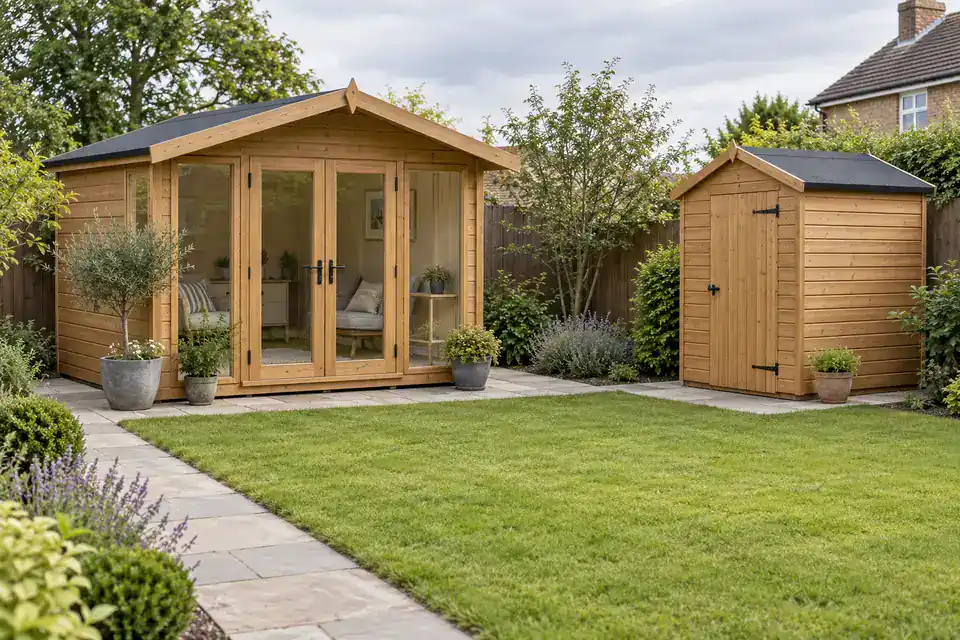
Mark out the proposed footprint before ordering. Check the overall dimensions, roof overhangs and height, then allow space for doors to open and for future maintenance around the walls.
External dimensions do not tell you exactly how much usable space will remain inside. Ask for internal measurements and sketch the furniture or equipment layout.
When buying a summerhouse, a comfortable arrangement matters more than fitting in the largest possible building. Consider the view, sunlight and privacy, while keeping practical routes through the garden clear.
Door opening dimensions also matter, particularly when moving large furniture or machinery inside.
3. Check planning permission before ordering
In England, some sheds and summerhouses qualify as permitted development, meaning a planning application is unnecessary when all relevant conditions are met. Windows and doors do not automatically trigger a requirement for permission.
Key checks include:
- Height near boundaries: any part within two metres of a boundary limits the overall height to 2.5 metres.
- Storeys and other heights: the building must be single storey, with maximum eaves height of 2.5 metres; overall height is normally up to four metres for a dual-pitched roof or three metres otherwise.
- Position and coverage: the building must not be forward of the principal elevation. Extensions and outbuildings together must cover no more than half the land around the original house, excluding its footprint.
- Restrictions and use: listed buildings, designated land, removed development rights and intended use can change the position.
This is a summary, not a complete eligibility checklist. Before buying a summerhouse, read the Planning Portal’s outbuilding guidance and confirm uncertainties with your local planning authority. Different rules apply elsewhere in the UK.
4. Treat building regulations as a separate check
Planning permission and building regulations are different matters. A building can satisfy one set of requirements and still need attention under the other.
For small detached sheds and summerhouses in England, building regulations will not normally apply below 15 m² of floor area where there is no sleeping accommodation. Between 15 m² and 30 m², the usual exemption also requires the building to be at least one metre from a boundary or substantially constructed from non-combustible materials.
Buying a summerhouse for sleeping accommodation needs separate assessment. Electrical work may have its own requirements even where the building is exempt. Check the outbuilding building regulations guidance and discuss uncertain cases with building control.
5. Arrange a suitable base
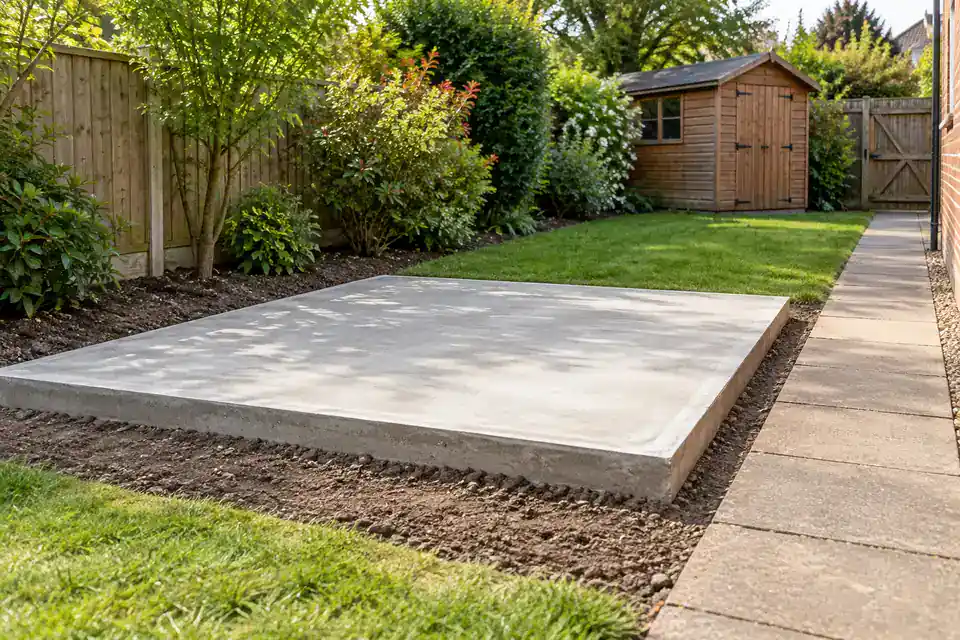
A garden building needs a stable, level base that supports it correctly. Grass, loose soil or an uneven surface is not a substitute for proper preparation.
Before buying a summerhouse, ask us for the floor plan and base requirements for your chosen building. Our base guidance covers concrete, slab and timber-frame options; our installation teams do not assemble our buildings on plastic bases.
Plan drainage and the finished base dimensions with care. Confirm what preparation is your responsibility and make sure the base is ready before the delivery date.
6. Compare the construction, not just the price
Two buildings with similar external dimensions can have very different specifications. Compare the framing, cladding, floor construction, roof covering, doors and hardware before deciding which offers better value for your needs.
Ask about floor suitability if you plan to store heavy equipment or use the building as a workshop. Check locks and glazing options when security matters.
Buying a summerhouse should involve looking closely at the details you will use every day. Find out how the doors operate, which windows open and what is included as standard rather than as an optional upgrade.
7. Understand timber treatment and maintenance
Our timber buildings use pressure-treated softwood, often described as tanalised timber. That treatment helps protect the wood, but it does not make the finished building waterproof or remove the need for ongoing care.
Follow our care advice and the coating manufacturer’s instructions when selecting and applying a suitable finish. Avoid assuming every product should be painted immediately, regardless of moisture content or coating requirements.
Timber can move as temperature and moisture levels change. Inspect the building regularly, including doors, roof covering and any guttering. Report significant leaks or operating problems rather than dismissing every issue as natural movement.
Budget for maintenance when buying a summerhouse or shed.

8. Choose glazing for your intended use
Glazing affects daylight, comfort, privacy and security. Compare the actual specification rather than assuming every single-glazed window uses the same glass or construction.
Occasional warm-weather use may suit a simpler glazing option. Regular use in colder months deserves a broader discussion about windows, seals, insulation and heating.
Buying a summerhouse with double glazing alone will not guarantee a comfortable winter room. Ask about the whole building, including the floor, walls, roof and ventilation.
Consider suitable safety glazing where relevant, opening windows for fresh air and blinds or shading where direct sunlight may cause glare or overheating.
9. Confirm delivery and installation arrangements
Check the route from the unloading point to the prepared base. Gates, narrow passages, steps, overhead obstructions and tight corners can affect whether large building sections can be carried through.
Before buying a summerhouse, send photographs and measurements of any awkward access. Our published FAQ asks for eight feet of height clearance and explains that sections cannot be lifted over walls or garages; confirm the full requirements for your order.
We offer delivery and installation, with delivery charges dependent on location. Ask us to confirm the total price, installation arrangements and current lead time in writing. Read our installation terms before preparing for delivery.
10. Budget for the complete project
The building’s advertised price is only one part of the budget. Allow for the base, any delivery charges, selected upgrades, coatings, furniture and professionally installed services where needed.
Buying a summerhouse is easier when you compare complete quotations. Ask what is included, what you must arrange separately and which guarantee conditions depend on installation or maintenance.
Consider how the space might develop over time, but prioritise the use you need now. A well-planned layout often gives better everyday value than extra floor space that makes the garden difficult to use.
Frequently asked questions
Does a summerhouse need planning permission because it has windows?
Glazing alone does not determine whether permission is required. Position, dimensions, use and property restrictions matter, and all relevant permitted development conditions must be met.
Is pressure-treated timber maintenance-free?
Regular checks and suitable weather protection are still important. Follow the supplier’s care guidance and the instructions for your chosen coating.
What should I ask before buying a summerhouse?
Confirm internal and external dimensions, base requirements, access, included fittings, delivery and installation costs, lead time and aftercare. Explain your intended use so the specification can be considered properly.
Find a building that suits your plans
Explore our summerhouses and garden sheds, or contact our team for help comparing options. Bring your garden measurements, access details and intended use so we can discuss a practical choice for your space.