
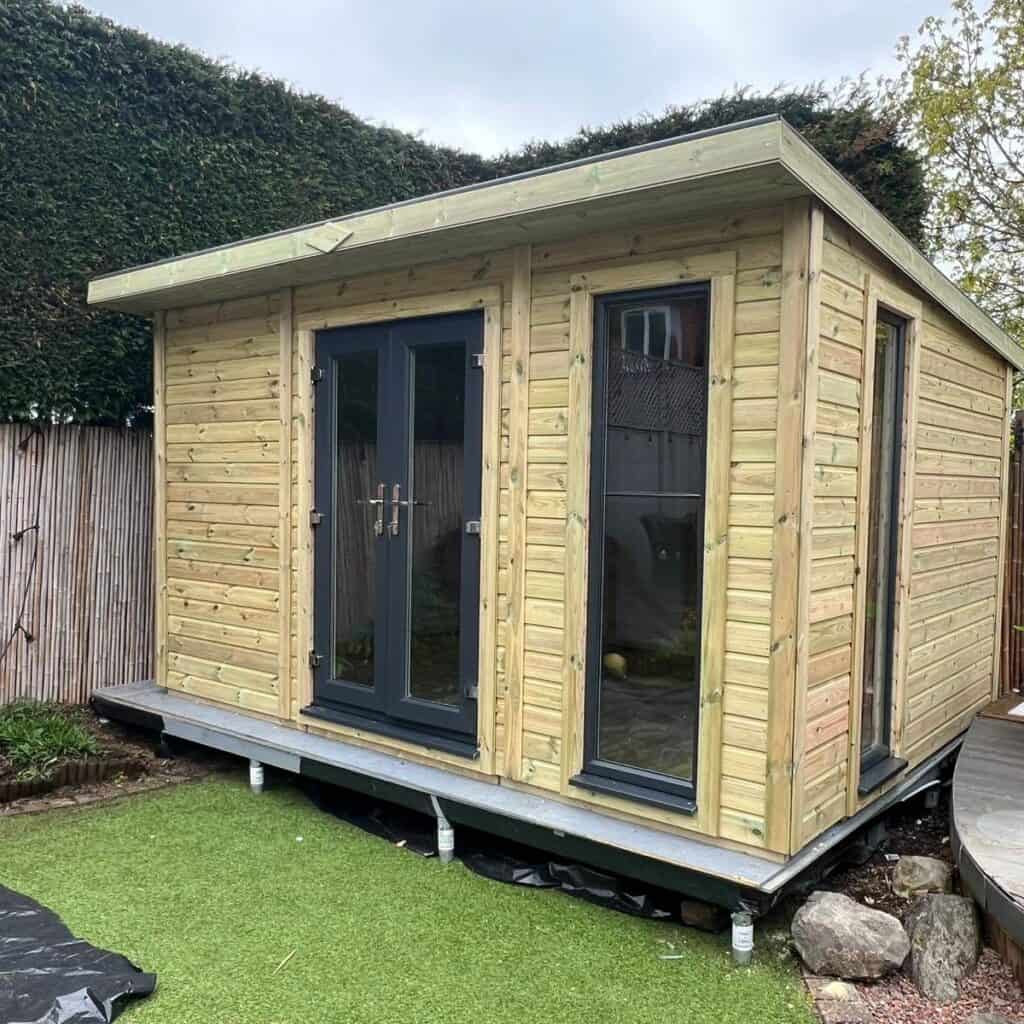
UPVC vs timber summerhouses is an important comparison when choosing a new garden building. Midlands Sheds and Summerhouses offers traditional timber designs alongside contemporary models featuring UPVC doors, windows and finishes, allowing customers to select a building that suits their garden, budget and intended use.
Timber summerhouses generally offer a lower initial price, a natural appearance and extensive design flexibility. UPVC models tend to cost more but provide improved glazing, lower routine maintenance and a modern finish that can suit year-round offices, studios and leisure rooms.
Neither option is automatically better. The right choice depends on how often the building will be used, the level of comfort required and how much maintenance you are prepared to undertake.
UPVC vs Timber Summerhouses at a Glance
| Feature | Timber summerhouse | UPVC summerhouse |
|---|---|---|
| Initial cost | Usually lower | Usually higher |
| Appearance | Natural and traditional | Modern and contemporary |
| Maintenance | Requires periodic care | Generally lower maintenance |
| Customisation | Highly flexible | Flexible, but some options cost more |
| Glazing | Timber or upgraded glazing | Often double-glazed UPVC |
| Insulation | Available as an upgrade | Commonly suited to higher specifications |
| Repairs | Individual timber sections can be repaired | Specialist parts may be required |
| Colour options | Can be painted or stained | Usually selected when ordering |
| Best suited to | Leisure, hobbies and seasonal use | Offices and frequent year-round use |
These differences provide a useful starting point, but individual product specifications must always be checked. A substantial timber building can outperform a basic UPVC model, while an insulated and double-glazed UPVC summerhouse will usually provide greater comfort than a lightweight seasonal timber structure.
Anyone beginning their search should also read our tips for buying a summerhouse or shed. Looking beyond appearance and comparing the complete specification will help you make a more informed decision.
What Is a Timber Summerhouse?
A timber summerhouse is a garden building constructed primarily from wood. Quality models normally use substantial framing, tongue and groove cladding, timber flooring and a boarded roof protected by felt or a premium waterproof covering.
Pressure-treated timber provides increased protection against fungal decay and insect attack. The treatment penetrates the wood rather than simply coating the surface, helping the building withstand long-term exposure to British weather.
Timber summerhouses are available in traditional apex styles, contemporary pent designs, Georgian-inspired buildings and summerhouse-shed combinations. They can also be manufactured in bespoke dimensions, making them suitable for awkward gardens or specific uses.
Our guide to choosing the perfect summerhouse explains how size, shape and intended purpose should influence your selection.
What Is a UPVC Summerhouse?
A UPVC summerhouse uses UPVC elements to create a more contemporary and lower-maintenance garden building. Depending on the particular model, these elements may include UPVC doors, window frames, glazing systems or external finishes alongside a substantial timber structure.
It is important to inspect the specification rather than relying on the product name alone. Two UPVC summerhouses may use different construction methods, wall materials, roof systems and levels of insulation.
Large glazed doors and windows are common features. These bring natural light into the building and can create the appearance of a modern garden room. If you are uncertain about the distinction, our comparison of a garden room vs summerhouse provides further guidance.
Which Type of Summerhouse Costs More?
Cost is often the deciding factor in the UPVC vs timber summerhouses comparison. Traditional timber models are generally the more affordable option because they use timber doors, windows and finishes rather than complete UPVC glazing systems.
UPVC summerhouses commonly have a higher starting price due to features such as:
- UPVC doors and window frames
- Double glazing
- More complex manufacturing
- Improved locks and hardware
- Contemporary studio designs
- Insulation or internal lining
- Premium roofing systems
A quality timber summerhouse may begin at a comparatively accessible price, while larger UPVC models can cost several thousand pounds more. However, the initial purchase price is only one part of the decision.
UPVC can reduce the time and money spent on exterior maintenance. Timber requires more routine care but can be repaired, restained and redecorated relatively easily. Understanding tanalised wood preservation will help you assess the long-term requirements of a timber building.
Which Requires Less Maintenance?
UPVC is generally the lower-maintenance choice. Frames and surfaces can usually be cleaned using warm water and an appropriate mild cleaning solution. UPVC does not require the same routine staining or painting as exposed timber.
Nevertheless, low maintenance does not mean maintenance-free. Hinges, locks, seals, drainage channels and roofing should still be inspected. Dirt and organic growth may collect around frames, while damaged seals can eventually affect weather resistance.
Timber summerhouses require more regular attention. Owners should check the roof, walls, doors, windows and areas around the base. An appropriate exterior treatment or decorative finish may also be needed periodically.
Our guide to maintaining your summerhouse explains the checks that can extend the useful life of either building type.
Which Summerhouse Looks Better?
Appearance is subjective. Timber provides a warm and natural finish that suits traditional gardens, planted areas and rural properties. It can be stained to highlight the grain or painted in almost any suitable exterior colour.
UPVC offers cleaner lines and a more contemporary appearance. Large glazed panels can make the building feel closer to a modern home extension, particularly when paired with a pent roof and minimalist interior.
The surrounding property should influence the decision. A rustic timber summerhouse may look more at home beside a cottage, while a UPVC studio can complement modern doors, windows and landscaping.
Timber also gives owners greater freedom to change the exterior colour in the future. UPVC colours are usually chosen when ordering and are less straightforward to alter later.
Which Is Easier to Customise?
Timber is exceptionally adaptable. The dimensions, roof shape, door position, window placement, overhang and internal division can all be changed during manufacture. Shelving, partitions and storage areas can also be incorporated.
UPVC buildings can still be customised, but alterations to glazing systems and frames may be more expensive. Customers should therefore think carefully about furniture placement, access, privacy and natural light before approving the final design.
Our summerhouse customisation ideas demonstrate how practical changes can make a garden building better suited to its owner.
Which Is Better for Year-Round Use?
Construction quality matters more than the name of the material. A summerhouse intended for winter use needs suitable wall, roof and floor insulation, effective glazing, ventilation and controlled heating.
UPVC doors and double-glazed windows can help reduce draughts and heat loss. This makes UPVC models a popular option for offices, studios and leisure rooms used regularly throughout the year.
However, a timber summerhouse can also be designed for year-round use. Insulation, internal lining, quality doors and suitable glazing can transform a substantial timber structure into a comfortable retreat.
Our guide to using a summerhouse all year round covers insulation, ventilation and seasonal preparation. You can also explore suitable summerhouse heating ideas before deciding on the final specification.
Heating should not be used as a substitute for insulation. An uninsulated building can be expensive to warm, while inadequate ventilation may allow condensation to develop.
Which Provides Better Security?
UPVC doors and windows often incorporate multi-point locking systems, strong frames and double-glazed units. These features can provide reassuring security for garden offices containing computers, monitors and other valuable equipment.
Timber summerhouses can also be made secure. Substantial doors, quality locks, strong hinges and toughened glazing all improve protection. Window placement can be adjusted to reduce visibility from roads, paths or neighbouring properties.
Security depends on the complete design rather than whether the building is described as timber or UPVC. Owners should consider:
- Door and window construction
- Lock quality
- Hinge protection
- Type of glazing
- Visibility from the house
- External lighting
- Storage for valuable items
A summerhouse used only for seating may need fewer security upgrades than a home office containing expensive technology.
Which Material Lasts Longer?
A well-manufactured and properly maintained building of either type can provide many years of service. Quality, installation and ongoing care matter more than material labels alone.
Pressure-treated timber is designed to resist decay and insect attack. Prompt roof repairs, appropriate surface treatments and good airflow around the building can help preserve it.
UPVC is resistant to rot and does not need painting. Nevertheless, hardware, seals, glazing and roof coverings can eventually require attention. UPVC components may also be less straightforward to repair using ordinary DIY methods.
Timber has the advantage of repairability. Damaged boards, trims and sections can often be replaced without rebuilding the entire structure. UPVC may require matching replacement profiles or specialist components.
Does the Base Requirement Change?
Both UPVC and timber summerhouses need a firm, flat and level base. UPVC does not make a building immune to problems caused by poor foundations.
An uneven base can distort the structure, interfere with doors and windows and place unnecessary stress on joints. Larger glazed buildings are especially dependent on accurate installation because frames must remain square for doors and locks to operate correctly.
Suitable options may include concrete, paving slabs or an appropriately constructed timber system. Read our advice on summerhouse bases before arranging delivery.
The base should be completed before installation and must be suitable for the weight and dimensions of the selected building.
Do Planning Rules Differ?
Planning requirements generally concern the size, height, position and use of the building rather than whether it is constructed from timber or UPVC.
Many domestic summerhouses fall within permitted development rights, but exceptions can apply. Additional restrictions may affect listed properties, designated land and buildings positioned close to boundaries.
A large summerhouse, tall apex structure or building intended for accommodation may require further investigation. Our article about planning permission for a large summerhouse outlines the principal considerations.
When in doubt, seek guidance from your local planning authority before ordering.
Which Is Better for a Garden Office?
UPVC is a strong choice for a frequently used garden office. Double glazing, secure doors and lower exterior maintenance create a building that feels closer to a permanent workspace.
Timber remains a practical alternative, particularly when budget or extensive customisation is the priority. With insulation, internal lining and a suitable electrical supply, a timber building can become a comfortable and productive office.
Our guide to creating a garden office explores the benefits of moving your workspace away from the distractions of the main house.
Whichever material you select, plan for sufficient sockets, lighting, ventilation, heating and reliable internet access.
Will Either Option Add Value?
A carefully chosen summerhouse can improve the appearance and usefulness of a garden. It may also appeal to future buyers who want a separate office, studio or entertaining space.
UPVC may appeal to buyers who value low maintenance and modern glazing. Timber may attract those who prefer natural materials and traditional garden design.
Condition is critical. A quality building installed on a suitable base is more likely to be viewed positively than a neglected structure requiring immediate work. Learn more about adding value with a quality summerhouse.
No particular increase in property value can be guaranteed, so the building should primarily be chosen for the benefit it offers your household.
UPVC vs Timber Summerhouses: The Verdict
Choose a timber summerhouse if you want:
- A lower initial purchase price
- A natural or traditional appearance
- Extensive size and layout customisation
- The freedom to repaint the exterior
- A building that can be repaired relatively easily
Choose a UPVC summerhouse if you want:
- Reduced routine exterior maintenance
- Modern doors and window frames
- Double glazing and improved draught resistance
- A contemporary studio appearance
- A building suited to frequent year-round use
Ultimately, the UPVC vs timber summerhouses decision should be based on specification, intended use and long-term value. Midlands Sheds and Summerhouses can manufacture and install a wide selection of buildings, helping you compare timber, glazing, roofing and customisation options before placing an order. Contact us today!